Week 10
This week was rough. Last week, I missed a week of medication, thinking it would be fine - it was not fine. Here’s to withdrawal and deciding never again to chance the windows between prescriptions! Other than that, this week has been good. A lighter week at work, which is always welcomed.
I did a lot more reading this week. I’ve run into the really lucky problem of having so many things I want to read and not enough time to read it all - quite literally tens of books I’m struggling to pick between.
Ask Me How It Works by Deepa Paul
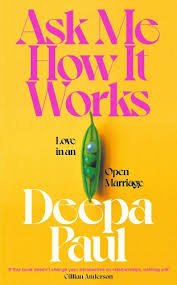
I found the premise of this really interesting, and the initial half really good. Ask Me How It Works is about Deepa Paul’s open marriage. We start with her childhood, the relationships she grew up around, how she met her husband, their struggles, her own struggles and how they discussed opening their marriage and how they managed the boundaries of their open relationship. It’s a deeply personal book that does not flinch away from the subject. I liked that all the chapters were posed as questions and were quite thoughtfully chosen - one of the end chapters is specifically about how they told their daughter they were in an open marriage, and what her understanding of their set up was.
But ultimately, I don’t think I liked this book very much. I think it’s interesting, but it felt… I think the issue with deeply personal books is that they are just that - deeply personal. Despite Paul’s framing of certain events, it felt like she constantly pushed her husband’s boundaries, again, and again until things worked out. It felt almost self serving rather than informative. I really struggled with this criticism because I’m aware of the social perception of open marriages, and I questioned whether I would feel the same way if the book had been written from a man’s perspective, and I think truthfully I probably would’ve disliked it more if that had been the case. I tried giving a lot of leeway to how uncomfortable the boundary pushing felt, but it just made me uncomfortable, and whilst I’m not necessarily critising Paul for her life or her experiences, I am criticisng her book for not also portraying an insight to this behaviour and the dynamic that it reflects to the reader. I think I would be disappointed if this was shortlisted for the Women’s Prize 2026.
Rating: ★★★☆☆
Kitchen Confidential by Anthony Bourdain
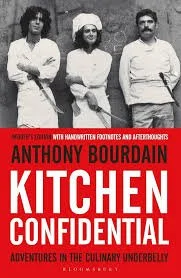
I really enjoyed this! I’ve said it before, I really like food writing and find the intensity of a chef’s kitchen/lifestyle really interesting, and Anthony Bourdain fully embraces this in his book. I borrowed my sister’s copy, and it was a special release annotated with Bourdain’s thoughts many years after the book was initially released in 2000. It felt more interesting to read his later reflections, musings and explanations of how things were and what had changed and how he felt about certain paragraphs now. He’d also underlined, crossed paragraphs out, circled things and it felt like a really intimate way to read a book.
I can’t really talk much about this, because the book is exactly what you’d think it is - Anthony Bourdain’s journey as a chef, the things he thinks every kitchen needs, what happens in a chefs kitchen, how he runs his kitchen, what he looks for in his sous chef, who he’s worked with, his struggles with addiction, even a chapter dedicated to explaining kitchen terminology and slang. My only criticism is that the book felt disordered, and the chapters didn’t necessarily line up chronologically so it felt a bit confusing trying to figure out what happened when and before this and before that and so on.
Rating: ★★★★☆
On Trampolining by Rebecca Perry
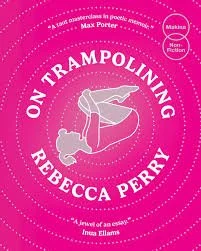
I can only dedicate this post to the staff at my local Waterstones who went through every effort to get this book for me. It’s been a hard search and I’m glad it paid off. On Trampolining is Perry’s memoir of her childhood spent in competitive trampolining (could you believe it?).
It’s also tied in with her stories of family, trauma, a sort of braid of childishness insight, intensity, reflections on the change and impact on Perry’s body, her relationship with competitive sport. It’s beautifully written, but so clearly written, which I think can be a hard thing to achieve when you want to write lyrically and poetically.
I really enjoyed this - so much so I read it within about 5 hours (though it only around 100 pages). I found it clever and insightful, and absolutely worth the wait.
Rating: ★★★★★
Flashlight by Susan Choi
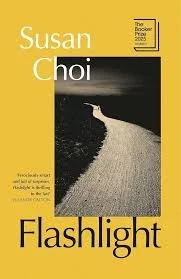
I was intrigued by this last year when it was nominated for the Booker Prize 2025 - and then seeing it longlisted for the Women’s Prize for Fiction 2026 only intrigued me more. It was also 5.99 on Kindle, which is a steal compared to the 11.99 pricetag last year.
Flashlight is about Louisa and her family. We start the novel just after something awful has happened; Louisa and her father were walking along the coast. They go missing, and eventually Louisa is found. But her father is not. He is presumed dead, but Louisa is adamant that something else happened.
The book jumps between the perspectives of the characters, primarily 4 of them. It skips timelines, zips back to the past, zips back to the future, in a very confusing way, but you kind of pick things up quickly. I really enjoyed this for its elegant prose, incredibly thoughtful and moving story, and the depth of the characters - though they left you endlessly frustrated. I loved that this book took a dive into something I hadn’t expected, a piece of history I hadn’t really thought much about. I loved the depth of this history, the painstaking research Choi has been involved with (so much so that her acknowledgements are mostly towards books that helped her!). I think I got quite lost in the prose towards the end, my eyes skipping parts and then my brain having to force itself to read them, and I think that ruined a book that had otherwise been quite good.
Rating: ★★★★☆